Feb
21
2017
Off picking flowers
If it seems that I have been quiet, it’s because I’ve been out picking flowers…… oh, wait, no, I mean I’ve been taking a lot of pictures. You can see them over on Flickr.

If it seems that I have been quiet, it’s because I’ve been out picking flowers…… oh, wait, no, I mean I’ve been taking a lot of pictures. You can see them over on Flickr.
More about bamboo trains from some Australian TV show:
 Nomads | Phil |
  Comments (0)
This is so incredibly cool. It’s been all over twitter but just in case anyone didn’t see it, look at this:
http://www.theatlanticcities.com/jobs-and-economy/2013/06/map-iphone-users-any-city-and-you-know-where-rich-live/5961/
Tags: Urbanology
Nomads, Tech, Uncategorized, Urbanology | Phil | Comments (0)
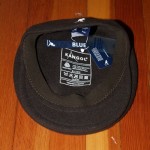
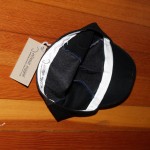
So I got two hats for Christmas. One is made by Kangol and one is made by Cima Coppi. As I started taking off the tags I was struck buy all subtle differences in packaging and brand-differentiation and how these two companies communicate to their customers through the tags and labels they put on their hats.
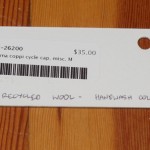
The Cima Coppi hat says nothing on the outside. On the hat band, as you can see in the picture: a simple stamp that has a logo and says: “cima coppi HandMade in Vancouver Canada”. There’s a tag attached that says exactly the same thing (I’m assuming it’s the same stamp) with the size M handwritten on it. I’ve also shown a picture of the reverse of the tag where you can see, in addition to the retailer’s price tag, another handwritten note: “100% recycled wool – handwash cold”.
Compare this to the Kangol cap:
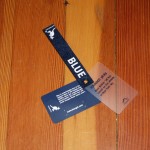
The Kangol hat has a catchy Kangaroo logo that’s embroidered into the back of the hat and printed on most the labels and tags. It has a large lable printed onto the inside (you can see it in the picture). That label states that it’s “100% pure new wool in three languages and gives washing instructions and says “Designed in Britain”. Another label at the back of the band gives the size, model number (I assume), origin (China), size, and a few other details. A second label at the back says “Kangol Founded 38.83 Blue”. I think Blue is the model name of this cap.
It has a set of three removable tags. One is clear plastic describing, sort of, the origin of the company: “Founded 38.83Â – Born British ’38 but raised on the streets of New York ’83”. A second tag is a ribbon with the Kangol logo and “Blue”. The third tag says: “Blue is unwaveringly true to the original ethos of the Kangol brand. Quality, value and unquestionably good product. No matter how the world changes these values won’t.” I have to admit, when I see little statements like this, I imagine the marketing consultants and company executives sitting around a sleek board room with large corplast boards on easels gazing at mockups and talking about the deep psychological buttons they’re trying to push and I wonder, don’t they realize that the more resources they pour into this kind of thing and more slick and “retro” they make it look and sound, the harder it is for them to overcome the powerful discrepancies between their labelling and Cima Coppi’s and what that says to me about the overall quality and authenticity?
Not that I’m complaining, mind you. They’re both nice hats and generous gifts.

Nomads, Urbanology | Phil | Comments (1)
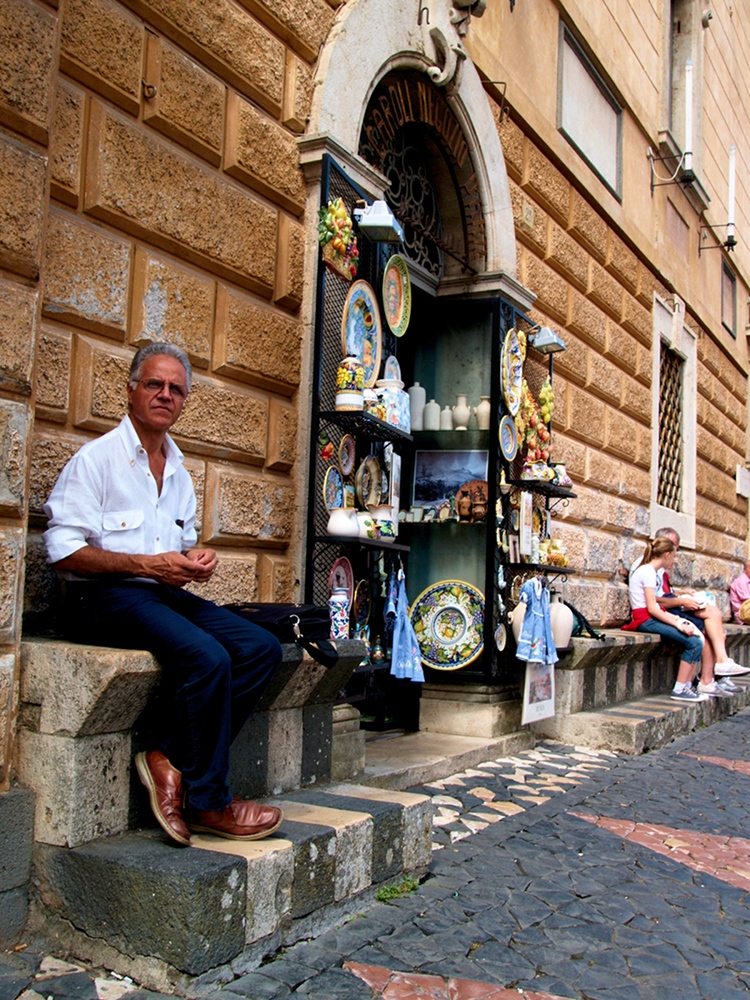
Cathedral square, Orvieto
I was reading La Bella Figura about how piazza’s are the centre of Italian public life and realized that there’s no where to go from our neighbourhood that’s part of my urban life. Will construction on Fraser street (at 39th or at 30th) help? Am I dreaming to think it would? And even if it’s something useful there, a cafe that people gather at, it’s going to be on a busy street. It’s not that piazza’s are always quiet, they aren’t. They can also be clogged with cars. But they’re in the *centre* of the community. Our neighbourhood quandrants that are bounded by arterials mean that the gathering places are at the edges of the neighbourhood: on the arterials. This is an inherent problem, I’d say.
Nomads, Urbanology | Phil | Comments (0)
As I reported last post: I was expecting that I’ll have to eventually get a new phone contract to allow the family the perception that they are in constant (potential) contact with me.
However, I’ve reached a temporary setback.
We have a FIDO “couples” plan. But only one phone on it at the moment because I removed my old phone last summer. But I didn’t change the plan because I wanted be able to add a phone back on to it. And so I called them and asked to do that.
Not so fast. To add a phone to this “existing” couples plan, that has only one phone on it, triggers a new 2-year contract. I’ve been a FIDO customer for 9 years. I don’t owe them any 2-year-contract. Ever again. But, says the customer rep, you can change the existing plan to a “legacy” single-number plan (with no fixed term contract) and add a new no-contract phone (as a separate account, I assume). But then we lose the pooled minutes and the legacy plan has too many minutes on the wrong phone. I told the nice pleasant customer-service rep that if I have to start new plans or new 2-year-contracts it triggers the necessity for me to research the other phone providers (including new ones coming this year) because I can’t assume that what Fido is forcing me to change to would be best for me. She told me I’ll have to do that homework.
Damn. Looks like I’m back to square one. Ever since Rogers bought Fido, my phone company has been an obstacle who acts like they’re out to screw me.
Nomads, Tech | Phil | Comments (0)
At the end of December I bought a Nokia N810 on Ebay. Among other things, it’s perfectly set up as a wifi-voip mobile phone. I’m getting used to saying “call me at xxxxxxxx”, then having people say, “oh, you have a new cell phone”, and I say, “it’s not really a phone but you can call me and when I’m in a wifi zone, I’ll call you back.”
Some people are intrigued and ask me more about it, but some people really don’t get it. The whole “not a phone but you can call me” is just too weird, I guess.
Anyway, it’s turning out to be very useful but one of the values of a cell phone (that family can call at any moment and have, in their minds, a reasonable expectation that I’ll answer) is a little bit lost on them. The fact of the matter is, however, that when they phoned while I was on my way home from work I wouldn’t likely hear or be able to reach my phone and it would go to message anyway.
That said, it’s pretty much a given that I’ll get a phone too, at some point in the near future. I’m just hoping not to give out the cell number to anyone but those who really have to use it (re: family).
Tags: Tech
Nomads, Tech | Phil | Comments (1)
I just handed back my iphone. It belonged to work and I changed jobs and I don’t get to keep it. So, now I’m without a cell phone for the 1st time in ten years. Will I survive?
I’m not sure. However, when I got the iphone in June I kept my old cell number by porting it to a voip provider who have very cheap, pay-as-you-go rates. This provider has a feature that emails me everytime someone calls and leaves a voice mail and, in fact, the email contains the voicemail as an attachment.
So, I’ve carried a wifi-enabled handheld device for years. In fact, at the moment I’ve just re-commissioned my old Palm Lifedrive and that device can usually connect in a wifi cafe and see the emails. Whether it can listen to the attachments, I’m not sure, but there’s also a voip app for the lifedrive which lets me actally make calls. But at the moment the lifedrive microphone isn’t working well and the audio from my calls is inaudible.
Anyway, there’s more work to do on this front and who knows, if I get this all sorted, maybe I won’t need no stinking cell phone!
Nomads, Tech, Urbanology | Phil | Comments (3)
Had a funny net-day in Abbotsford today. I was at a couple meetings at University of Fraser Valley and I couldn’t get normal websites such as gmail, basecamp, or facebook. Not even plain old google. But I could get VPL’s super-weird user-unfriendly remote email connection where you have to go through a firewall with port 950, authenticate there with a generic login, leave that window open while you then go to an outlook-webclient page using a weird, hard-to-remember URL. It was astonishing. That weird email routine is usually hard to get inside the network of academic institutions; yet, today at UFV, I could get in using my laptop with a borrowed wireless authentication as well as using a library workstation and a guest-authentication.
I mean. That’s just not normal. I’m sure they must have been having some kind of dns/bandwidth/I-don’t-know kind of problem to prevent google and gmail but to have that stuff *not* get through when weird email firewall stuff does get through is very strange.
Nomads, Tech | Phil | Comments (0)
